


When choosing a human hair wig, most people focus on hair texture, length, and color. However, wig cap construction is just as important because it affects how naturally a wig looks, how comfortably it fits, and how easily it can be styled.
Understanding the different types of wig cap construction can help you find the right option for your needs. From lace front and full lace wigs to closure, 360 lace, monofilament, hand-tied, and wefted caps, each construction offers different benefits.
In this guide, GUGU HAIR explains seven popular wig cap construction types, compares their features, and helps you choose the best option for your lifestyle and budget.

The wig cap is the foundation or “base” of your wig. It is the structure underneath the hair where the strands are sewn, tied, or ventilated. Wig caps play a crucial role in:
In short, the right wig cap can make the difference between a wig that looks artificial and one that looks like it’s growing out of your scalp.
There are several wig cap construction types, each designed for different styling preferences, comfort requirements, and budgets. Understanding how these caps are made can help you choose a wig that matches your daily routine and desired appearance.

What it is:
Wefted caps (also called “capless”) are constructed with rows of machine-sewn hair wefts. There are open spaces between the rows, allowing excellent airflow.
Benefits:
Limitations:
Best for: Beginners, casual wig wearers, or anyone looking for a budget-friendly and cool option.

What it is:
Each strand of hair is individually tied by hand to a soft mesh base. This method creates the most natural hair movement and scalp appearance.
Benefits:
Limitations:
Best for: Those with hair loss, alopecia, or anyone looking for a premium natural look.

What it is:
Monofilament wigs feature a transparent mesh section (usually at the top or crown), giving the illusion of natural hair growth and allowing multi-directional parting.
Benefits:
Limitations:
Best for: People who want a natural top and flexible parting without paying for a full lace cap.
Lace front wig cap construction features a delicate lace panel along the front hairline, with individual hair strands typically hand-tied into the lace. The remaining cap often uses machine-sewn wefts or other supporting materials.
This construction creates a natural-looking front hairline while offering a balance between realistic appearance, styling flexibility, and affordability. The available parting space depends on the size and design of the lace panel.

Benefits:
Limitations:
Best for: Those who want a natural hairline with easy installation.
Full lace wig cap construction uses a lace base that extends across the entire head, with hair strands individually hand-tied throughout the cap. Unlike lace front wigs, which primarily feature lace at the front, full lace wigs provide greater freedom to part and style the hair in multiple directions.
This construction is especially suitable for customers who prefer versatile hairstyles, including ponytails, buns, and updos. However, full lace wigs generally require more careful handling and may cost more because of their detailed construction.

Benefits:
Limitations:
Best for: Professionals, stylists, or anyone who wants top-tier realism and versatility.

What it is:
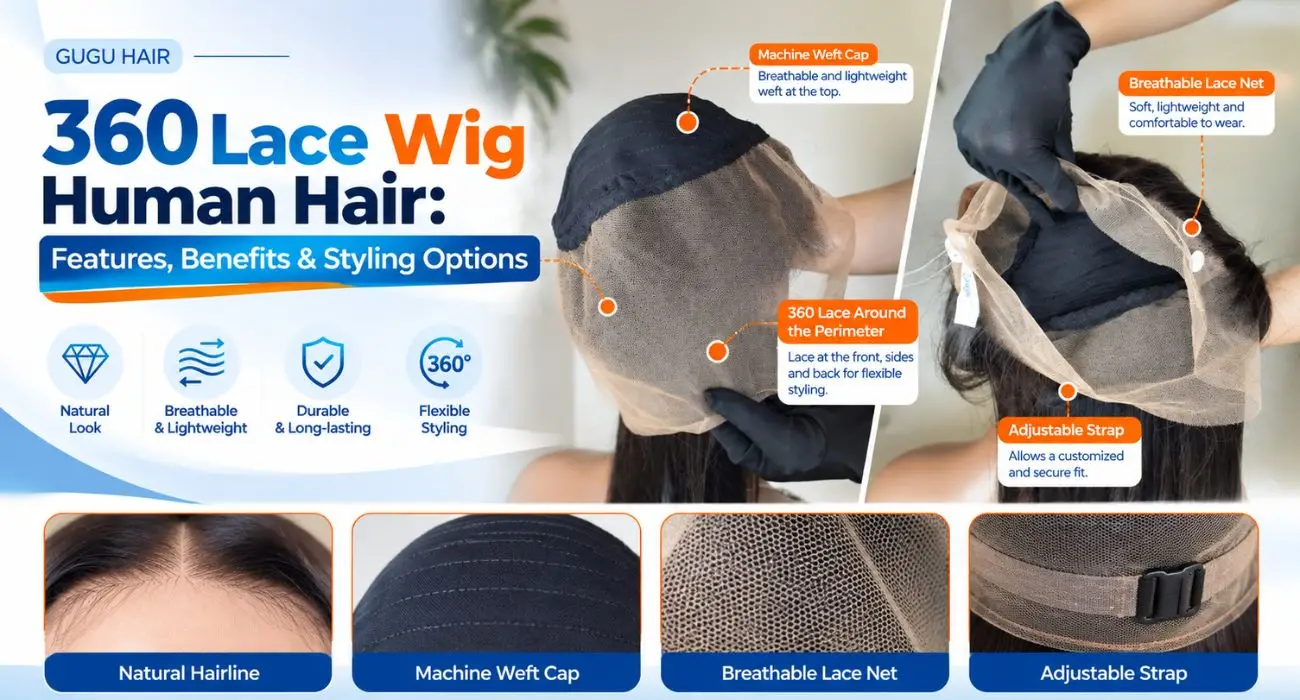
A 360 lace wig has lace around the perimeter (front, sides, and back), while the center uses machine-sewn wefts. It blends the best of full lace and lace front.
Benefits:
Limitations:
Best for: Those looking for styling flexibility at a lower cost than full lace.

What it is:
Closure wigs have a small lace section (4×4, 5×5, or 6×6 inches) at the crown. The rest of the cap is wefted.
Benefits:
Limitations:
Best for: New wig users or anyone looking for a simple, low-maintenance option.
| Wig Cap Type | Natural Look | Styling Options | Comfort | Price Range | Ideal For |
|---|---|---|---|---|---|
| Wefted | ★★☆☆☆ | ★☆☆☆☆ | ★★★★☆ | $ | Budget shoppers |
| Hand-Tied | ★★★★★ | ★★★★★ | ★★★★☆ | $$$$ | Realism & comfort |
| Monofilament | ★★★★☆ | ★★★★☆ | ★★★☆☆ | $$$ | Flexible parting |
| Lace Front | ★★★★★ | ★★★★☆ | ★★★★☆ | $$$ | Natural hairline |
| Full Lace | ★★★★★ | ★★★★★ | ★★★★★ | $$$$$ | Maximum styling |
| 360 Lace | ★★★★☆ | ★★★★☆ | ★★★★☆ | $$$$ | Updos & ponytails |
| Closure | ★★★★☆ | ★★☆☆☆ | ★★★☆☆ | $$ | Simplicity |
Choosing the right wig cap construction depends on your wearing habits, preferred hairstyles, scalp sensitivity, and budget. Some constructions prioritize natural-looking hairlines, while others focus on breathability, easy installation, or flexible styling.

Ask yourself these questions before choosing:
Recommendations:
Choosing the right wig cap is just the first step. Proper installation is equally important for achieving a natural and comfortable fit. Check out our beginner-friendly guide on how to put on a wig for easy step-by-step instructions.


At GUGU HAIR, we offer a wide range of 100% human hair wigs with premium cap constructions, including lace front wigs, 360 lace wigs, full lace wigs, closure wigs, and monofilament options.
All our wigs are made from raw Vietnamese hair, known for its natural shine, strength, and longevity. Whether you need a breathable cap for hot weather, a full lace for unlimited styling, or a beginner-friendly closure wig, GUGU HAIR can customize your wig to fit your exact size and style needs.
👉 We also provide custom lace dimensions such as 13×4, 14×6, 4×4, 5×5, 6×6, and 7×7 to ensure a perfect fit.
Choosing the right wig cap construction is the key to achieving a natural look and all-day comfort. With GUGU HAIR, you can trust that every detail is designed for your confidence and beauty.
Understanding wig cap construction is essential when choosing a human hair wig that looks natural, feels comfortable, and suits your styling needs.
Whether you prefer the versatility of full lace wigs, the realistic hairline of lace front wigs, or the convenience of closure wigs, each cap construction offers unique advantages.
At GUGU HAIR, we provide premium Vietnamese human hair wigs with different cap options to meet the needs of individual customers, hairstylists, salons, and wholesale buyers.

TOP 1 GUGU HAIR
FACTORY VIETNAM