


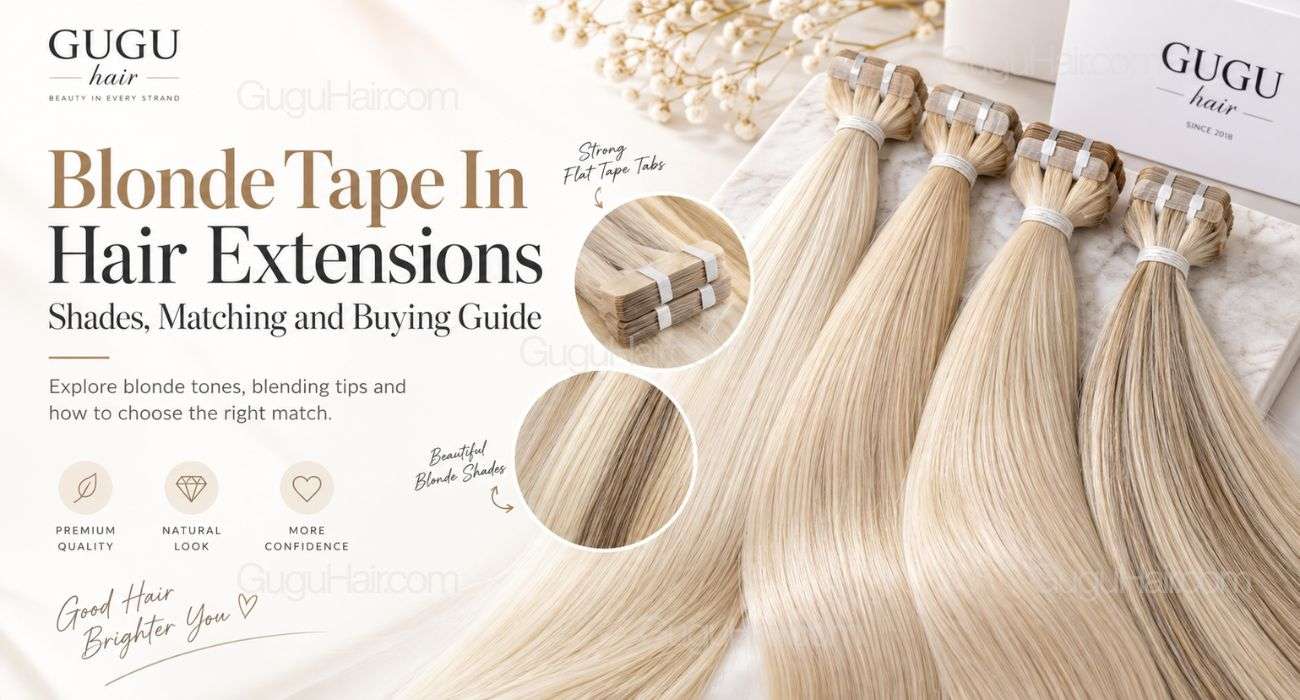
Blonde tape in hair extensions can be more complicated than simply picking “blonde.”
Blonde hair can be warm, cool, neutral, bright, rooted, or dimensional. Two shades may look similar in a product photo but create very different results once they are placed next to your natural hair.
The right blonde should work with your base color, undertone, and everyday styling, not just look beautiful on its own.
If you are still exploring other colors such as brunette, copper, or ombré, our guide to colorful tape in hair extensions gives a broader overview. Here, we are focusing only on blonde and how to choose a shade that actually works with your hair.
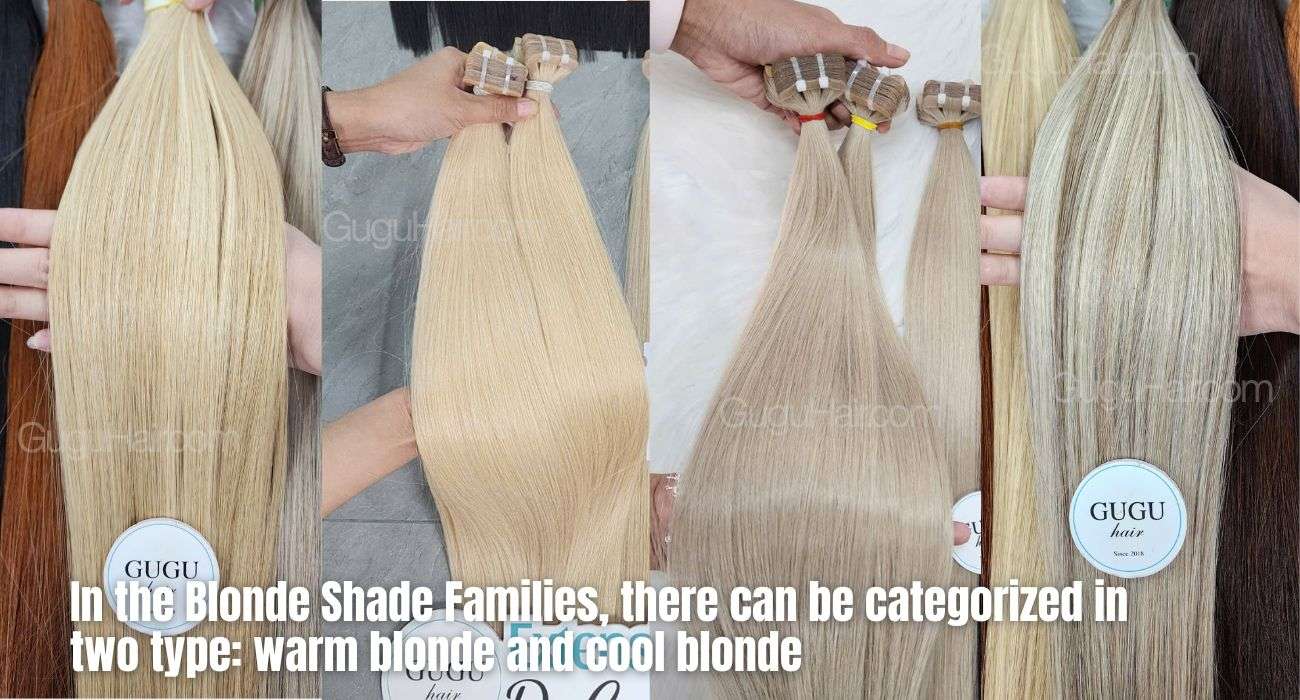
Before choosing a product, it helps to understand that blonde shades usually fall into several broad families.
Warm blonde may include:
These shades usually contain yellow, gold, or warm beige undertones.
They can work especially well when the natural hair already has golden warmth or when the desired result is softer and sun-kissed rather than icy.
If your natural blonde looks warm in daylight, choosing an extension that is too cool may create a grey or disconnected appearance.
Cool blonde includes shades such as:
These tones contain less visible warmth and may lean slightly grey, beige, or silver.
They tend to blend better with naturally cool blonde hair or hair that has been toned to reduce yellow or golden tones.
The most important thing is not whether warm or cool blonde is “better.”
It is whether the extension shares the same overall temperature as your own hair.
Platinum blonde tape-in extensions create a very bright result, but platinum is one of the shades where small color differences can become easy to notice.
One platinum shade may look:
That means choosing “platinum” by name alone is not enough.
If your own hair has a clean icy finish but the extension is noticeably creamy, the lengths may appear warmer than the top of your hair.
The opposite can happen too. Extremely cool extensions can stand out against warmer light blonde hair.
For the best comparison, look at real product images and pay attention to the extension from the attachment area through the ends.
If you are choosing a very light blonde Tape-In, discreet placement also becomes important because contrast around the attachment can be easier to notice.
Our guide to Invisible Tape-In Hair Extensions explains more about how construction, placement, and color work together to create a natural-looking finish.
Not everyone has blonde hair directly from the roots.
Many blonde styles include:
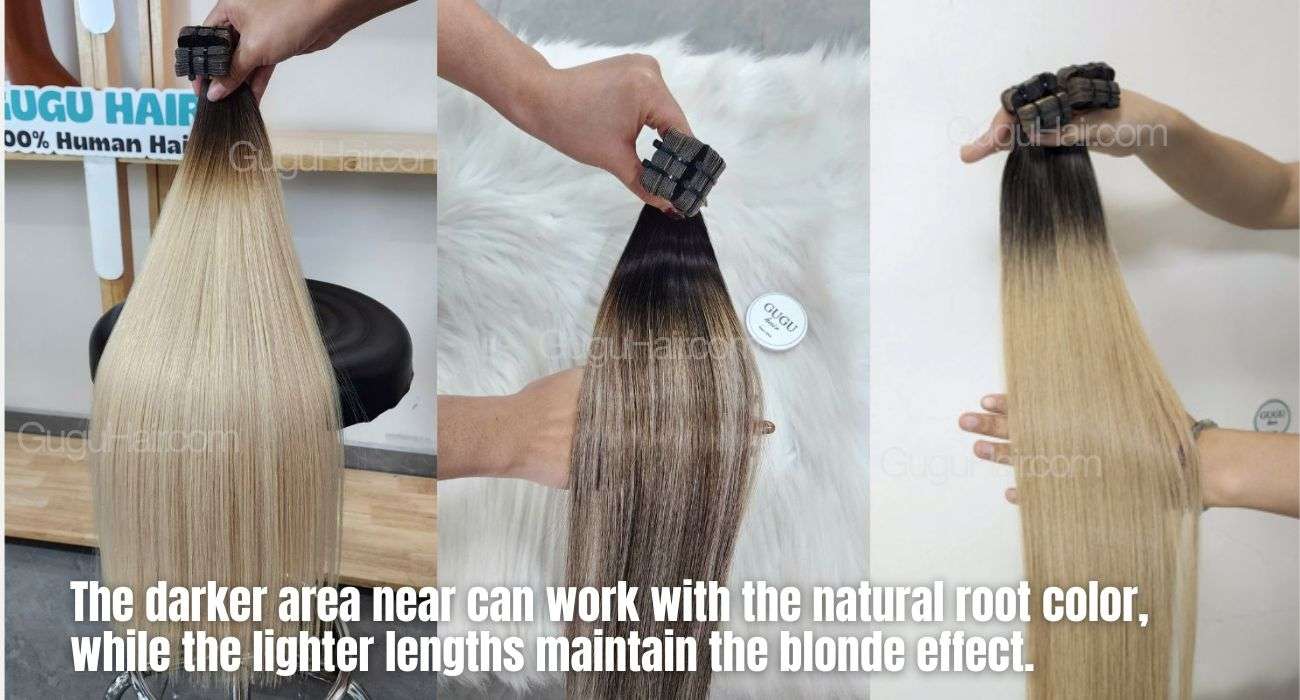
For these customers, a completely light blonde extension from top to ends may create too much contrast near the attachment.
A rooted blonde can create a softer transition.
The darker area near the top of the extension can work with the natural root color, while the lighter lengths maintain the blonde effect.
When choosing rooted blonde Tape-Ins, compare three areas:
Root: Does the darker top work with your natural base?
Transition: Does the color change gradually enough to fit your existing hair?
Ends: Is the final blonde shade compatible with your lengths?
The extension does not need to duplicate every highlight in your hair, but the overall transition should feel connected.
Natural-looking blonde is often not one uniform shade.
It may contain several tones at once:
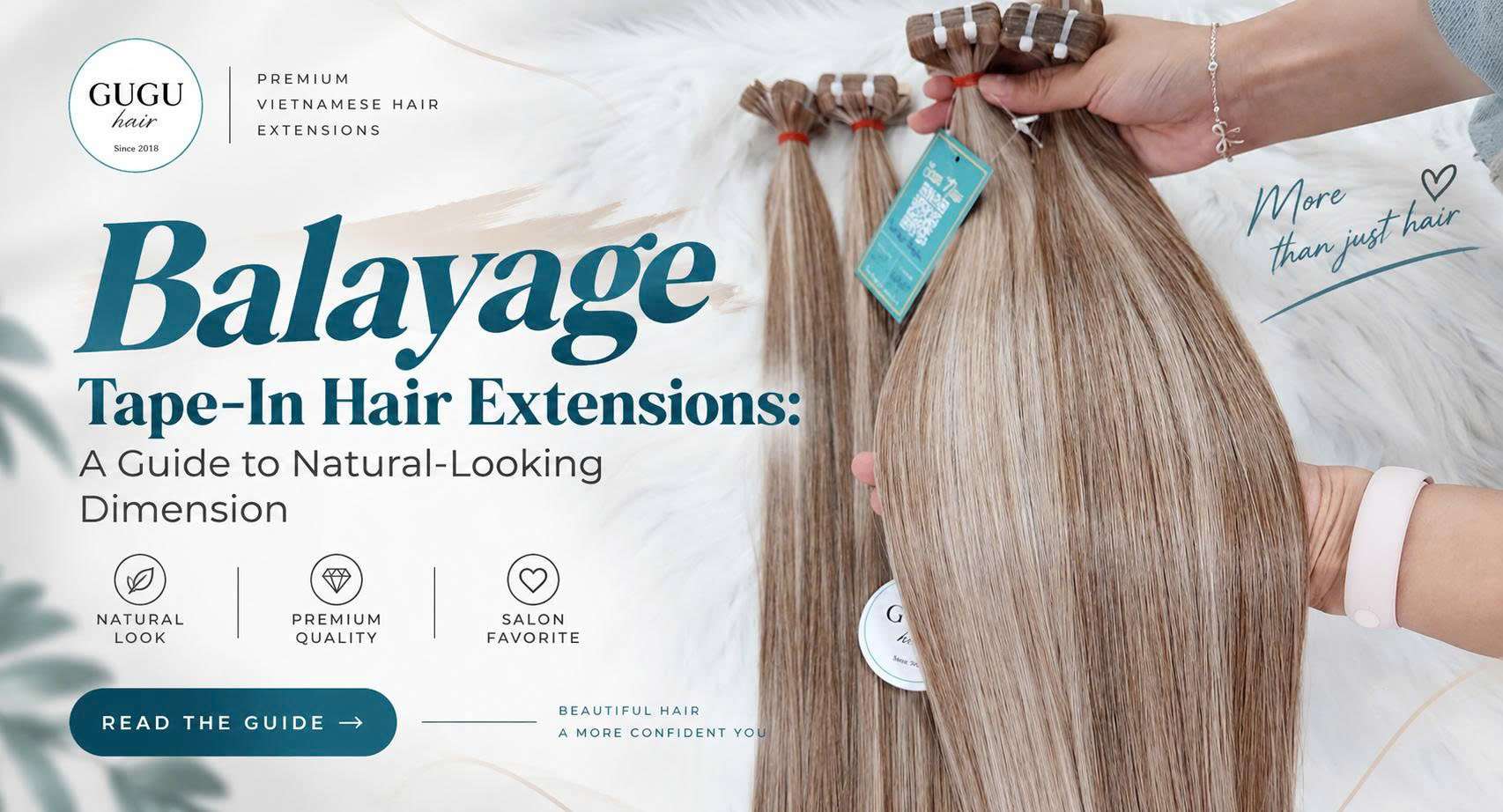
In these cases, highlighted blonde tape extensions may blend more naturally than a single solid blonde.
The different tones help break up the extension visually, making it easier for the added hair to integrate into dimensional natural hair.
This can be particularly useful if your hair has salon highlights or balayage.
Rather than matching the brightest highlight alone, look at the overall balance of color throughout your hair.
Choosing an extension based only on the lightest section can sometimes leave the rest of the hair looking too bright.
Explore GUGU Hair’s guide to Colorful Tape In Hair Extensions: A Guide to Blonde, Copper, Ombre and More!
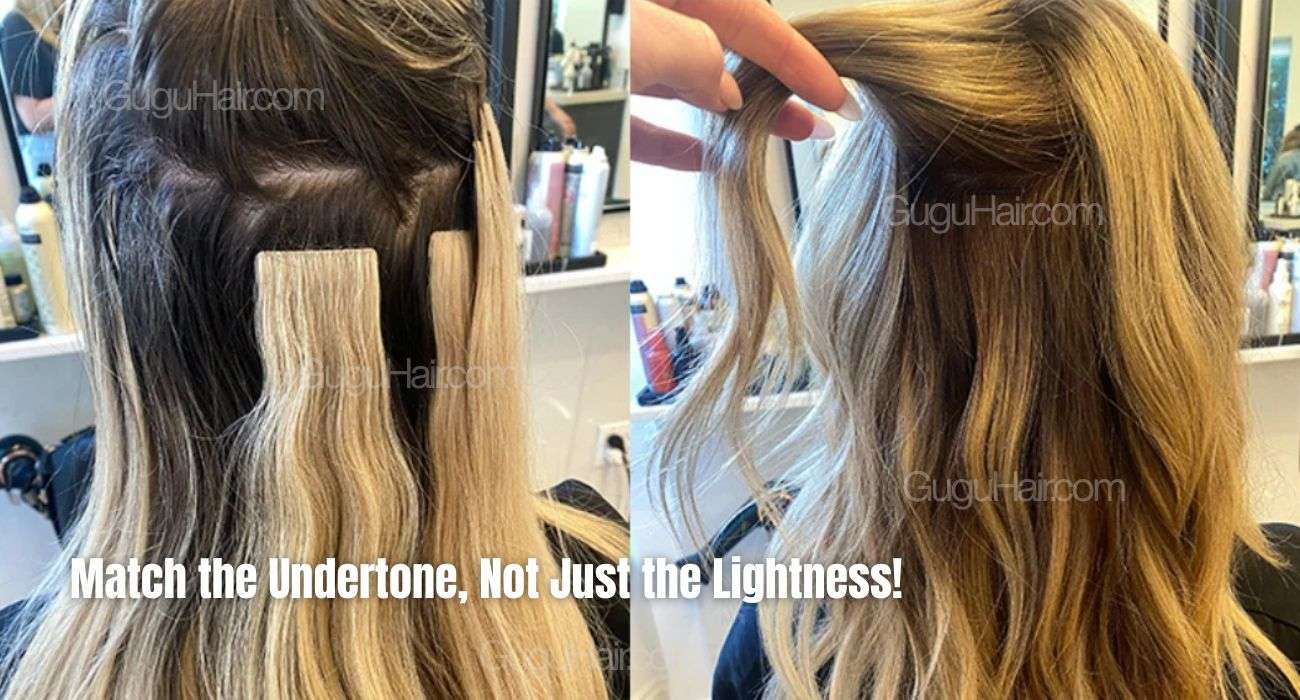
Two blonde shades can be the same level of lightness but still look completely different.
This is usually because of undertone.
Imagine two light blonde extensions:
Both may technically be “light blonde,” but placing the wrong one beside your natural hair can create an obvious contrast.
A simple way to think about undertone is:
Warm hair: golden, honey, caramel, or yellow tones.
Cool hair: ash, grey, silver, or icy tones.
Neutral hair: balanced beige tones without strong warmth or coolness.
When comparing human hair blonde tape ins, look at your hair in natural daylight whenever possible.
Artificial indoor lighting can make blonde appear warmer or cooler than it really is.
Matching only your root color can be a mistake.
So can matching only the ends.
Blonde hair often changes tone from top to bottom.
For example:
Look at the entire hairstyle and decide where the extension needs to integrate most naturally.
If you have darker roots and lighter ends, rooted or dimensional Tape-Ins may be easier to blend.
If your hair is consistently blonde throughout, a more uniform shade may work well.
The same principle applies when selecting any Tape-In product: color should be considered together with length and texture.
If you want a broader guide to evaluating these specifications, see GUGU Hair’s article on how to choose the right Tape-In extensions.
Color does not look exactly the same on every texture.
Straight blonde hair tends to show color transitions more clearly because the strands fall in one direction.
Wavy hair can make blonde appear more dimensional because different sections catch the light as the hair moves.
That means highlighted or mixed blonde shades may become even more visible in wavy styles.
Before choosing your extension, think about how you normally wear your hair.
If you regularly style it in soft waves, look at product images showing the blonde shade in a similar texture whenever possible.
This gives you a more realistic idea of the final result than looking only at perfectly straight hair.
Blonde is one of the colors most affected by photography.
Lighting can change how a shade appears dramatically.
A cool blonde may look warm under yellow lighting. A beige blonde may appear almost platinum under bright studio lights.
Whenever possible, compare:
Real product images are especially important when comparing very similar shades.
Do not make your decision based only on the color name.
This is also why product quality matters alongside color. If you want to understand more about Vietnamese human hair used for Tape-In extensions, GUGU Hair’s Vietnamese Tape-In Hair Extensions guide covers those characteristics separately without repeating the blonde selection process here.
If you are stuck between two options, compare them in this order:
1. Root compatibility
Which shade creates the smoother transition near the attachment?
2. Undertone
Which one is closer to your natural warm, cool, or neutral tone?
3. Mid-length color
Which shade blends into the majority of your hair?
4. End color
Will the extension ends look too bright, too dark, or appropriately blended?
If both shades are close, a dimensional or mixed option may sometimes create a more forgiving blend than a completely flat color.
When uncertain, asking the supplier for additional product photos or color guidance is more useful than guessing from a shade name.
Final Thoughts
Choosing tape in blonde hair extensions is not about finding the lightest or brightest blonde available.
The most natural result comes from understanding your own hair first.
Look at:
base color + undertone + root depth + highlights + final blonde shade.
Warm blondes work differently from ash tones. Platinum requires careful matching. Rooted and highlighted shades can help when your natural hair already contains several colors.
The right blonde should make the extensions feel like a continuation of your hairstyle rather than a separate layer of hair.
Discover Tape in Hair Extensions at GUGU HAIR
Made from 100% raw Vietnamese human hair, designed for women who understand that true beauty does not need excess.
GUGU HAIR – Pure. Clean. Timeless.
Contact us:
WhatsApp: +(84)385637191
Alibaba: GUGUHAIR
Email: guguhair99@gmail.com
Factory Address: Phu Luu, Trung Nghia, Yen Phong, Bac Ninh
Office Address: #2, street 5, Galaxy Van Phuc, To Huu, Ha Dong, Hanoi
How do I choose the right blonde Tape-In extensions?
Compare your natural base color, undertone, and root depth with the extension. Also consider whether your hair is solid blonde, highlighted, or rooted.
What is the difference between ash blonde and warm blonde Tape-Ins?
Ash blonde has cooler grey or beige undertones, while warm blonde contains more gold, honey, or yellow tones.
Are platinum blonde Tape-In extensions difficult to match?
They can require more careful matching because small differences between icy, silver, beige, and creamy platinum tones are often noticeable.
Should blonde extensions match my roots or my ends?
Both matter. The attachment area should work with the surrounding hair, while the lengths and ends should blend into the overall hairstyle.
Are highlighted blonde Tape-Ins better for highlighted hair?
They can be a good option because multiple shades may integrate more naturally with hair that already contains highlights and lowlights.

TOP 1 GUGU HAIR
FACTORY VIETNAM